From Grunge to Grace:
How Alternative Music Prepared Me for Music for the Soul
By Brian Parker
Growing up in the 1990s, my radio was a complete mash-up of sounds and cultures. R&B, rap, hair metal, boy bands, synth-pop, oldies, and rock were all competing for my musical ear. Looking back, I don’t know how we managed to juggle so many styles at once.
Alternative rock and grunge music (which bloomed in 1991) pulled me in like a magnet. This music felt honest, unpolished, different and messy. It gave a new voice to a new generation. Alternative rock didn’t seem interested in fitting a perfect mold or repeating whatever was already working. At its best, this music made room for contradiction. A song could be beautiful and disturbing, tender and angry, hopeful and broken all at the same time.
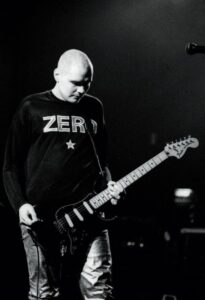
While a lot of artists were trying to sound like Kurt Cobain or Eddie Vedder, I was drawn to Billy Corgan and The Smashing Pumpkins. Corgan didn’t hide his imperfect voice, crooked teeth, and bald head. His influences came from misunderstood bands like Black Sabbath, Joy Division, The Cure, and My Bloody Valentine. He wasn’t trying to imitate these bands, he was inspired and honoring what made them unique. Many bands and artists tried to copy what was popular, but what could not be replicated was Corgan’s unique blend of pain, ambition, faith, anger, beauty, and longing woven through his songs.
Before I discovered the Pumpkins in 1995, I had been writing songs alone in my room as a wistful, contemplative teenager. Most of them were melancholy and came from a deep place within me that I didn’t yet understand.
On the outside, I was known as the funny kid and the parody-song guy. Still, I would often hear people say, “You’re too serious,” or ask, “Why aren’t you smiling?” My father gave me the joy of singing and entertainment. My mother always encouraged my deeper side and often seemed amazed by the thoughts and emotions I carried. As a people pleaser, I learned to swing hard between being really silly and being deeply introspective and sad.
It’s funny that I became so attached to a band with a name as ridiculous as The Smashing Pumpkins. Their music could shift from gut-spilling songs about hurt and sorrow and waves of ear-piercing noise to something strangely tongue-in-cheek, then suddenly become sweet, airy, and loving.
This band brought me into a familiar and honest space, somewhere between light and pain, hope and brokenness, dawn and dusk.
From Connection to Creativity
In junior high I wrote a poem that was published in the newspaper called Waisted Time Along The Window Pain. It said things like:
“You are my sunlight. You are my rain.”
It captured how I felt at the time. Both rain and sunshine could bring beauty as well as pain. When I was around fourteen or fifteen, I wrote a chorus that went:
“Do you cry? And do you write down thoughts? And are you alone tonight? It’ll be alright.”
When I first began taking my faith seriously, I still wrote from a darker, more alternative place rather than in a traditional gospel style. One song I wrote during that time was called “Slave to Friend.” A passage from it has stayed with me:
“In my choice, I will not frown, I’ll wear a smile, put away my pride.
I will not frown, I’ll wear a smile, ’cause you are by my side.”
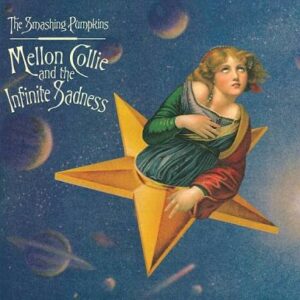
I connected deeply with Mellon Collie and the Infinite Sadness, the Smashing Pumpkins’ ambitious 1995 double album, which I thought was a masterpiece. At 15 I saw them live in Sacramento and sang every word along. I bought all the merch, posters and read the album’s lyric book like a religious text.
While I did rock out to their angry and agressive music, I was somehow drawn to the slower, quieter songs that weren’t the big radio hits. Songs like Thirty-Three and In the Arms of Sleep. There was something raw in those tracks that made me feel seen and trust the songwriter.
Lyrics like:
“Sleep will not come to this tired body now
Peace will not come to this lonely heart”
Or
“Speak to me in a language I can hear
Humor me before I have to go
Deep in thought, I forgive everyone
As the cluttered streets greet me once again”
Later, I asked a friend to name his favorite Pumpkins song, and he said Disarm. I was surprised because it was not on the album I owned, so I went back and explored the band’s earlier music, including an album called Siamese Dream (1993). That was when everything clicked for me. Disarm was not just another alternative song, it was ahead of its time. It was a ballad filled with church bells and strings, yet carrying something much heavier beneath its beauty.
Billy Corgan connected Disarm directly to the pain of his childhood and his relationship with his parents. In a 1993 interview, he said:
“I didn’t have the guts to kill my parents, so I thought I’d get back at them through song.”
He went on to explain that instead of writing something angry and violent, he chose to create something beautiful, hoping they would recognize the tenderness in his heart and understand the pain they had caused.
The lyrics that stuck with me the most from Disarm were:
“Disarm you with a smile and cut you like you want me to. Cut that little child. Inside of me and such a part of you, oh the years burn.”
And
“The killer in me is the killer in you..my love.”
In a recent appearance on SPIN Magazine’s Lipps Service with Scott Lipps podcast, Corgan said the lyric reflects the idea that every person carries a shadow or animalistic nature within them. Instead of judging others as though we are fundamentally different, he believes we must recognize that the same darkness exists within each of us, and choose whether or not to confront it. Corgan has explained that what he and his special needs brother endured was connected to what their parents were taught, or had not been taught.
The song Disarm spoke to a kind of generational abuse that alternative rock bands were unwilling to address openly at the time. By bringing his darkness into the light, Corgan gave other artists permission to do the same.
Personally, I didn’t grow up in a house that was abusive and I thank God for a great childhood. However, there was a strong tension in my home from many different angles. Outside of the home I was unfortunately exposed to a highly sexualized environment at a very young age. I saw things from people outside my home that I was too young to understand. This brokenness would eventually impact my songwriting and vulnerability like Corgan.
Now as I reflect on the past ten years of my songwriting, songs like Maker’s Hand, Untie Me, Dragonfly, and Something Real begin to make much more sense. My themes are clear: anxiety, feeling knotted up inside, deep loss, and the longing for something real.
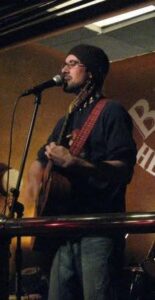
I’ve learned that when I write honestly without looking away, it not only helps me release what I am carrying but also can remind others that they are not alone. Billy Corgan’s honesty inspired me to write, and now I hope my own honesty can do the same for someone else. In that way, the cycle of writing from a true and honest place has continued, shaping the path that led me to where I find myself today.
Finding Music for the Soul
In my current chapter, I’m honored to serve as the Director of Vision and Outreach for Music for the Soul, a nonprofit that uses music and stories to bring hope and healing to people in pain. In many ways, it feels as though my journey has come full circle. When Steve Siler, founder of Music for the Soul, heard my song Untie Me, there was an immediate connection between us. It became clear that we shared the same heart for writing songs that enter into people’s pain honestly. That shared spirit lies at the center of Music for the Soul, which is about to celebrate it’s 25th year in December of 2026.
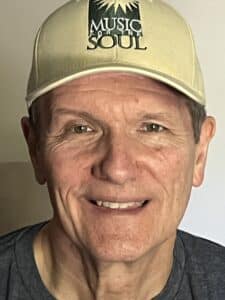
Before Steve Siler started Music for the Soul, he already had a successful career. He has had over 500 of his songs recorded in the Christian, pop, & country music markets. He had written hundreds of songs that got played on the radio. He had every reason to keep going down that road. But back in 1990 he helped write music for a stage musical called I Can’t Talk About It, which dealt with childhood sexual abuse. He saw how many wounded children were still living inside adult bodies, and how long that pain can keep affecting someone’s life. That experience planted the seed for what eventually became Music for the Soul.
Steve has said that a lot of Christian songwriting at the time didn’t seem willing to go into what he called the deeper end of the pool. Songs were expected to wrap up neatly in a few minutes and end with some kind of smile. But real healing doesn’t usually work that way. People often start with anger, denial, shock, grief, or rage. Sometimes a song doesn’t need to fix the pain. Sometimes it just needs to tell the truth about it.
Steve’s heart has always been that people won’t trust us with their hope until we show them we understand their pain. He describes the work of Music for the Soul as expressing the inexpressible. Putting into music what people have felt but never had the words for.
To me, Music for the Soul feels like the kind of alternative movement I connected with when I was a teenager. I’d even call it punk rock inside the Christian music world. Not because of volume or image, but because it’s willing to challenge the expected formula. We write about childhood sexual abuse, addiction, suicide grief, abortion grief, caregiving, anxiety, betrayal, cancer, eating disorders, and other things most people don’t know how to talk about. We go into the deeper end of the pool.
That doesn’t mean we throw hope away. It just means we don’t offer it cheaply. We sit with people in the truth of what happened first. We try to give their pain language. Only then do we start pointing toward healing, freedom, and the love of Christ.
Alternative music taught me to stay true to my own voice, even when it’s messy or ugly. The Smashing Pumpkins and Billy Corgan helped me see that. And walking with Jesus as a songwriter has taught me to chase authenticity without falling into hopelessness. Music for the Soul has given me a place where those two things can actually work together.
As songwriters and creatives, we’re not here to hide the wound or worship it. We’re here to bring it into the light, give it language, and trust that God’s grace can disarm us with His smile so we can write a different ending.